
The 2025 CPKC Holiday Train will tour Canada and the U.S. Nov. 19 through Dec. 21, raising money, food and awareness to support food banks across our network. Professional musicians play free concerts from the brightly decorated train’s stage. CPKC donates to the local food bank at each stop and encourages all attendees to make a monetary or heart-healthy food donation.
Since its inaugural journey in 1999, the CPKC Holiday Train has raised more than $26 million and collected approximately 5.4 million pounds of food for community food banks in Canada and the U.S.

Do you wish you could just jump onto this train and see if it takes you to the North Pole? Maybe see flying reindeer?

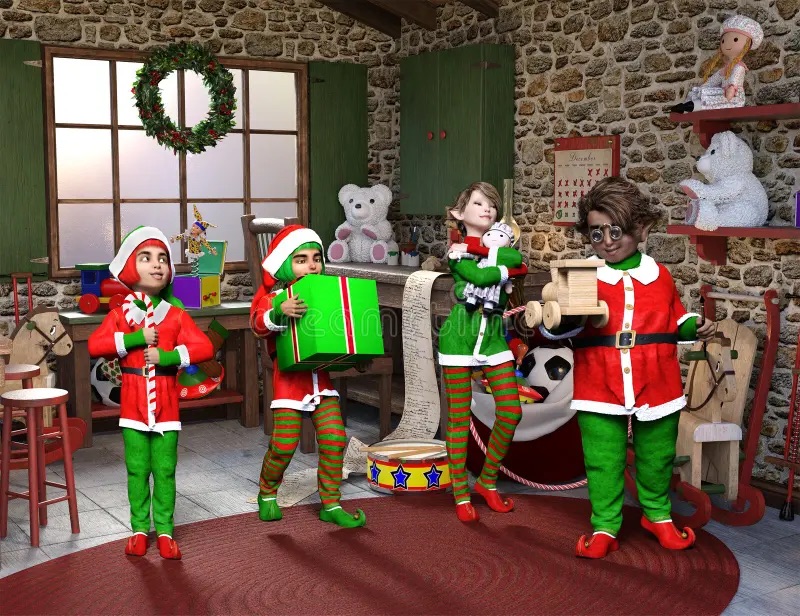
Maybe elves making toys for all the good girls and boys?
Or even Mrs. Clause making cookies?

Oh my! What about the jolly Santa himself?!

How exciting that would be! To believe as we used to when we were young ones ourselves….
Kids believing in Santa is a normal part of childhood that helps them understand fantasy and imagination. Belief typically begins to fade around age eight, though there is wide variation, with many children stopping gradually as they accumulate evidence or question the logistics. A child’s belief in Santa is often tied to childhood innocence and magic, and parents can navigate this transition in different ways, such as by gradually bringing them into the “secret” or by making them part of the Christmas magic for younger siblings.
Why kids believe in Santa
- A normal part of development: It is common and healthy for children to believe in magical figures like Santa, as it is a part of their social and cognitive maturation.
- Imagination and reality: Children are often not able to distinguish fantasy from reality completely until later in childhood, so believing in Santa is part of that learning process.
- Gradual process: Disbelief often creeps in gradually as kids get older. They may start to question things and accumulate a number of “clues” that lead to skepticism.
When belief starts to fade
- Age eight is the average: The average age that children start to become skeptical is around eight years old.
- Wide variation: The age when belief fades varies greatly, with some children becoming skeptical as early as four or five and others holding on to the belief until they are 12 or 13.
How to navigate this transition
- Respond to their questions: You can respond to their questions by gently prompting them to think through what they believe, or by using generic phrases like, “People say that Santa does this”.
- Shift into a new role: Once they start to understand, you can turn them into an “ally” by making them part of the magic, giving them responsibilities like helping with younger siblings’ Santa gifts.
- Highlight the meaning of Christmas: The transition is a good time to focus on the true meaning of the holiday season, such as being happy, sharing joy, and giving to others.

To believe…….
 Live life to the fullest! Explore your world!
👍
LikeLiked by 1 person