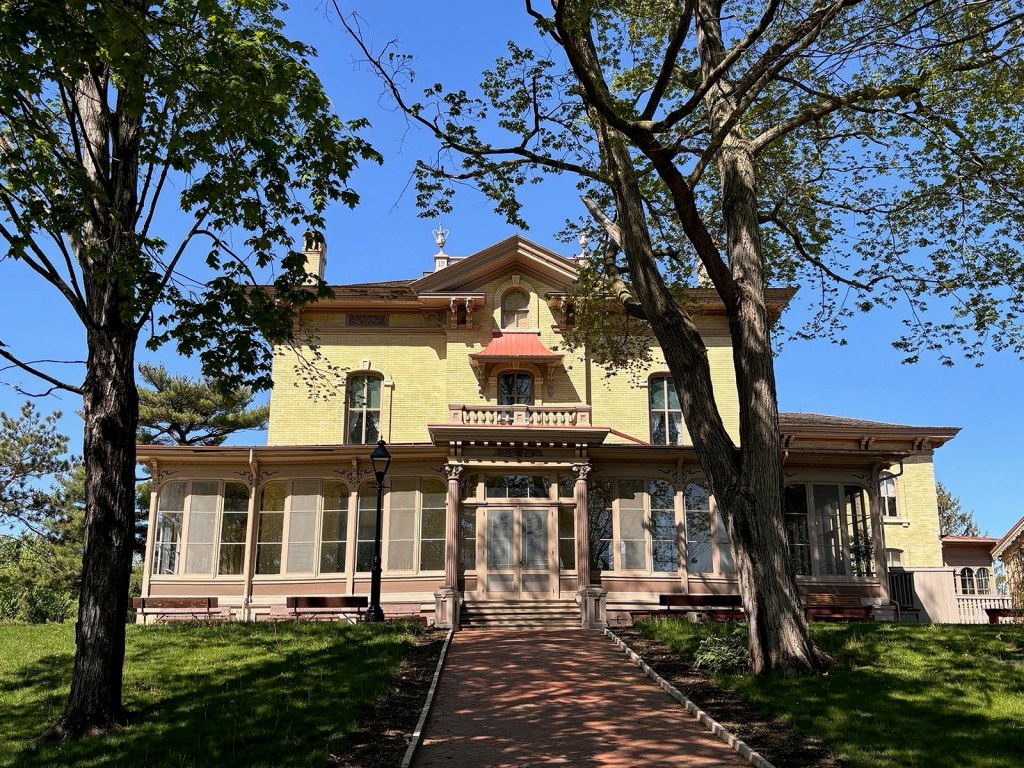
When you walk through the doors of Villa Louis, you step into the life of one of Wisconsin’s most historic families – The Dousmans. Located on the beautiful banks of the mighty Mississippi River, this National Historic Landmark offers a panorama of Wisconsin history, from the advent of the first fur traders, to the War of 1812, through the splendor of the Victorian era.
Over 2000 years ago, Indigenous peoples lived on the grounds we now attribute to Villa Louis. For centuries, Native Nations of the upper Mississippi gathered upon the island to trade among themselves until the fur trade brought French-speaking traders in contact with Indigenous tribesmen and women.
The trade also attracted free Black settlers to Prairie du Chien. Additionally, officers and agents of the United States brought enslaved men and women to the prairie, some of whom lived at Fort Crawford and other structures that once stood on land that is now part of Villa Louis State Historic Site. Research and restorations continue to fully expand the story of these early residents and events.
Early 1800s
The First Dousman house, “The Brick House on the Mound,” was built between 1843 and 1844, and later razed to build the mansion that exists today, in almost the identical space.
When Hercules Louis Dousman (1800 – 1868) passed away, a newspaper obituary at the time noted that a biography of the man— commencing with his arrival to the upper Mississippi region— would not fall far short of a history of Wisconsin and Minnesota, so involved was he with the region’s development. Through his various enterprises as a fur trader, lumberman, land speculator and frontier entrepreneur, Dousman would acquire a fortune.
In the mid-1840s, he and his family began developing an estate on the banks of the Mississippi River at Prairie du Chien that would evolve into Villa Louis. Its vibrant hues and rich textures reflected the family’s rise to wealth and leisure living. Throughout its evolution, the property was always considered an elegant and stylish Victorian country home, and much attention was paid to the grounds surrounding the mansion and outbuildings.
1868
Upon Hercules Dousman’s death in 1868, the estate passed to his son, H. Louis Dousman, and his widow, Jane Dousman. In 1870 they contracted with Milwaukee architect E. Townsend Mix to build a new residence in the fashionable Italian Villa style. The old House on the Mound came down, though some parts were recycled into the new building.
The elder Mrs. Dousman lived there while son Louis tended to his family, business and social life in St. Louis. When Jane died in 1882, Louis chose to move back to Prairie du Chien and start a new business — a stock farm for Standard Bred trotting horses.
Mid 1880s
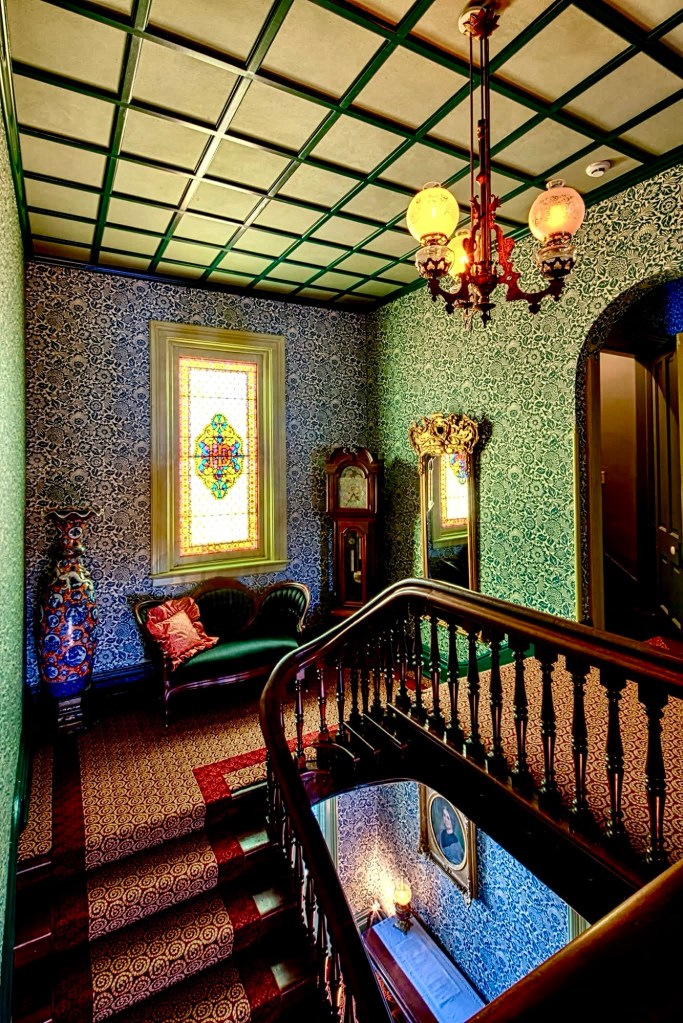
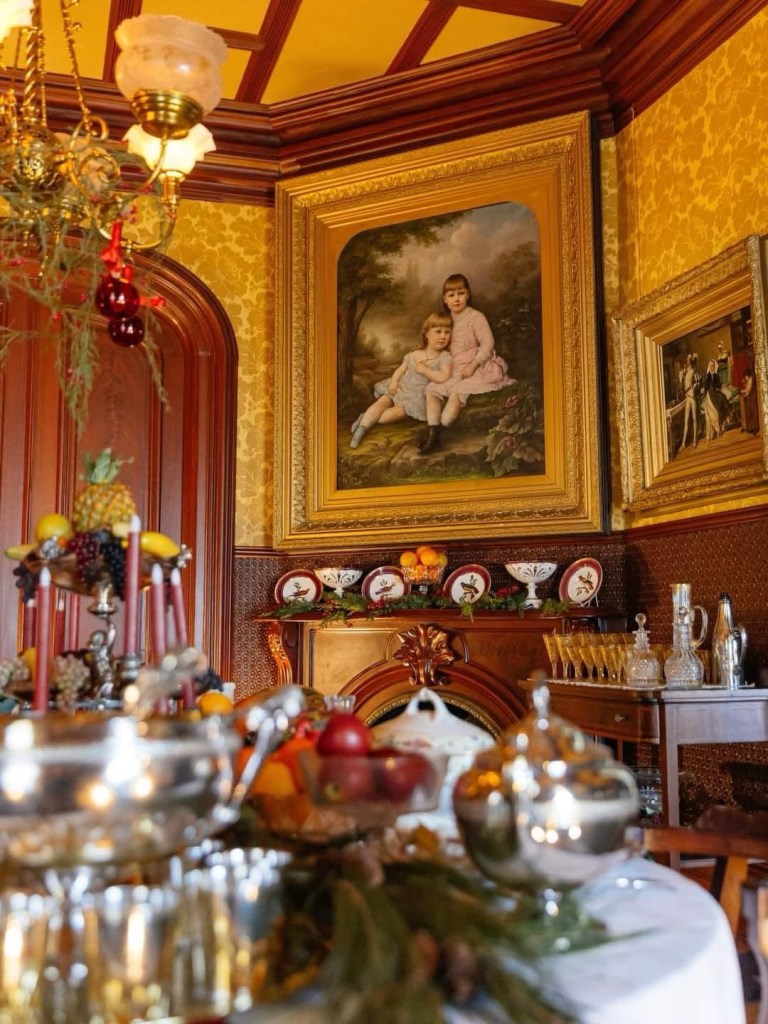
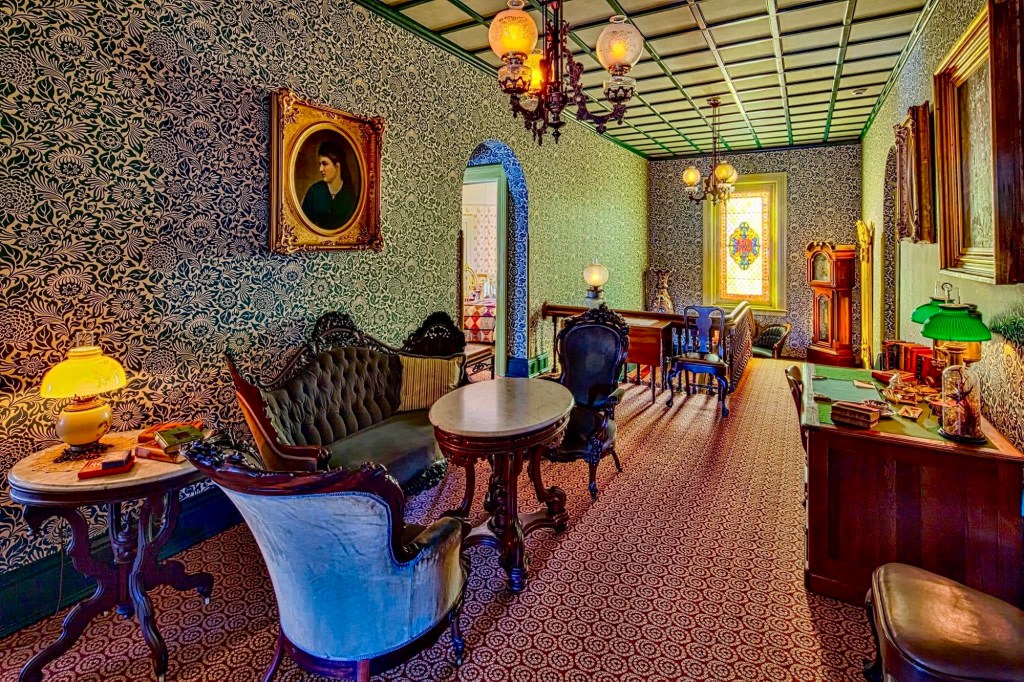
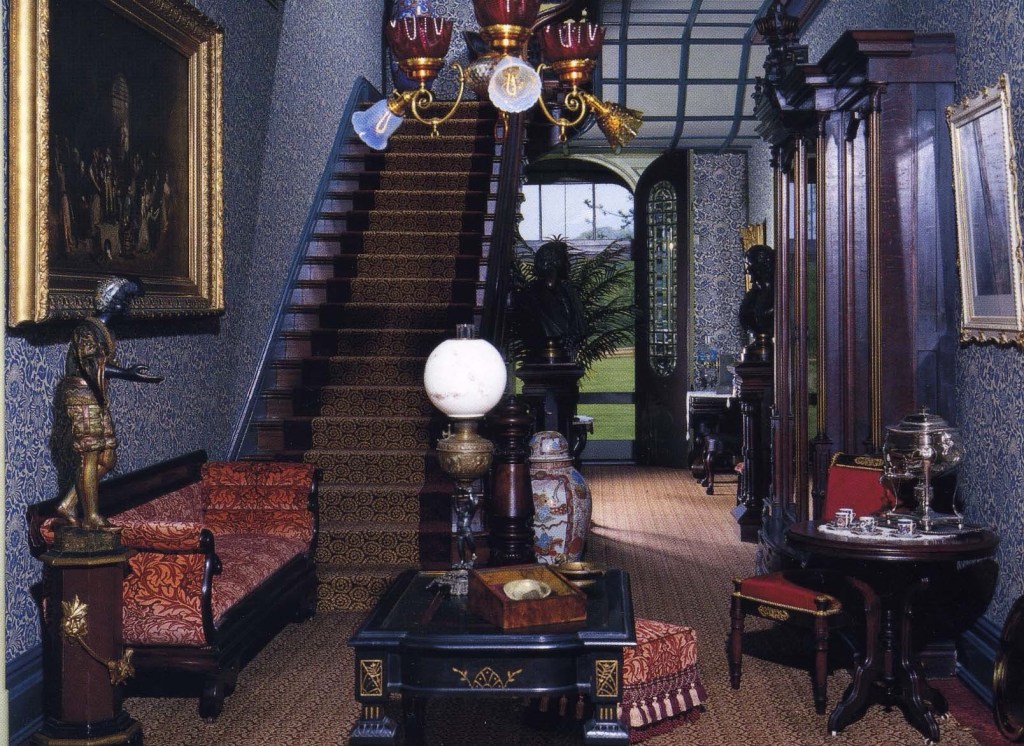
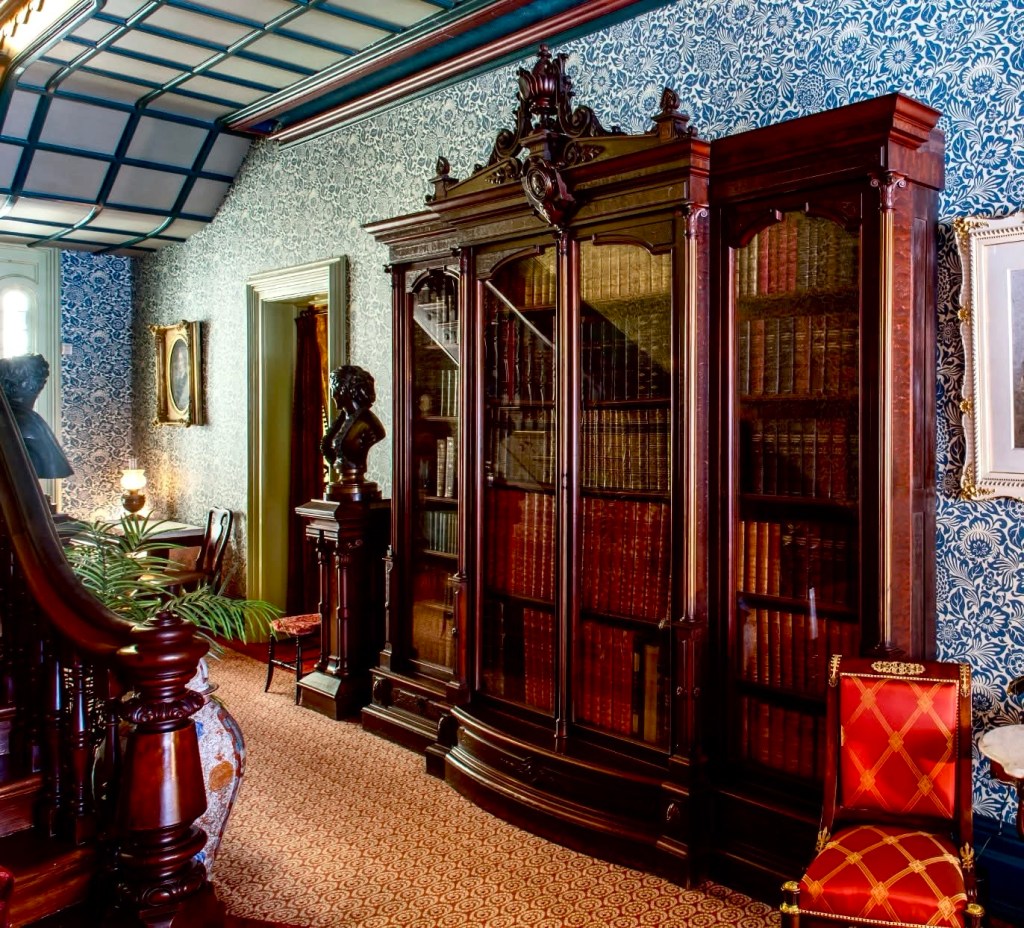
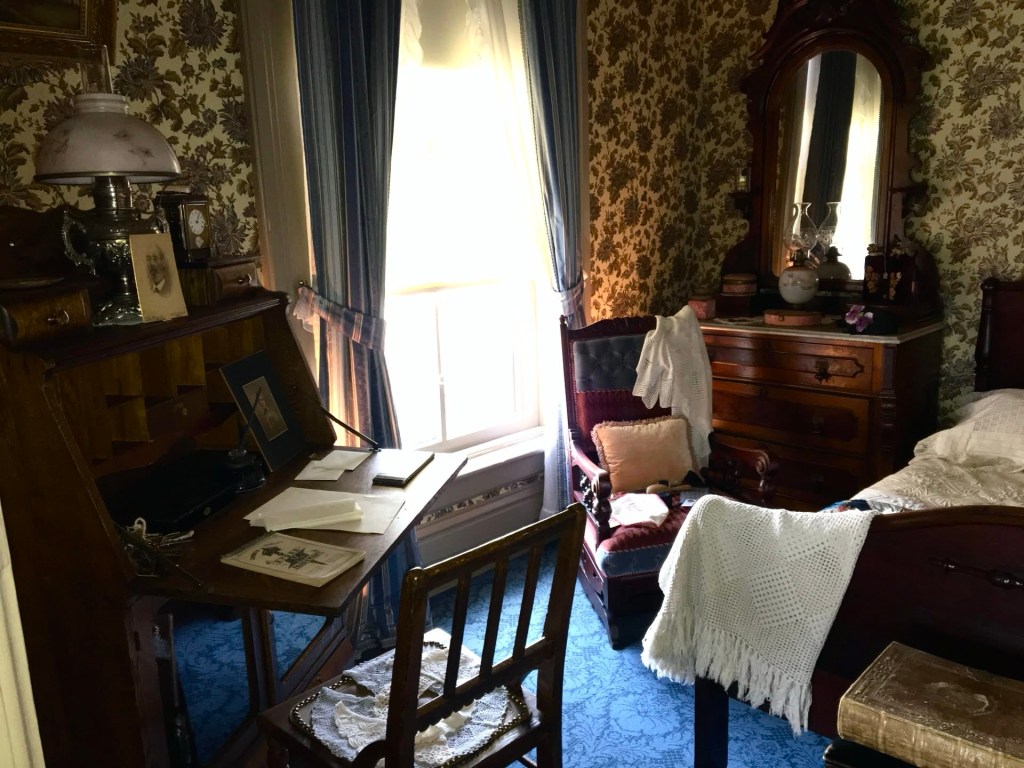
To prepare for his new life as a country gentleman, Louis and his wife, Nina Sturgis Dousman, initiated an extensive expansion and remodeling of the Prairie du Chien property in 1885. They built stables, barns, a race track and other buildings pertinent to the stock farm. They also enlarged and redecorated the house and the adjacent office. Dousman hired a Chicago-based designer from the famed William Morris Company of London. The result was a thorough reworking of the mansion, exemplifying the design principles of the British Arts and Crafts Movement.
Late 1880s
The remodeling of the estate and the launch of the stock farm business were barely completed when 37-year-old Louis suffered a fatal health crisis — believed to be a ruptured appendix. At the time of his death, his five children ranged in age from two to 10 years and his widow was just 33. Within a few months of the funeral, the horses were sold and a new and lasting name had settled on the estate — Villa Louis — in tribute to H. Louis Dousman.
Nina Sturgis Dousman remarried in 1888. The new couple relocated to New York City, but their’s proved to be a troubled union, ending in divorce in 1891. In the late summer of 1893, the Dousman family returned to the Villa Louis, where they remained until 1913.
1930s
In the 1930s, mindful of their family’s important place in Wisconsin history, Virginia Dousman Bigelow and Violet Dousman Young, granddaughters of fur trader Hercules Dousman, undertook a restoration of Villa Louis. The property was handed over to the city of Prairie du Chien for operation as a house museum in 1935.
1950s
A decade later the family renewed the offer — at a time when serious interest in local history was just beginning to emerge. This time the Society expressed enthusiasm. On January 1, 1950, the Society took title to the property and buildings, though court proceedings left the matter unresolved until April 1952, when Villa Louis opened to the public.
1990s
The Dousman heirs also donated a large collection of furnishings and accessories original to the house as well as thousands of letters, business records, photographs and other archival documents. The family’s original donation was subsequently enhanced by significant donations from their heirs and purchases from their heirs’ estates.
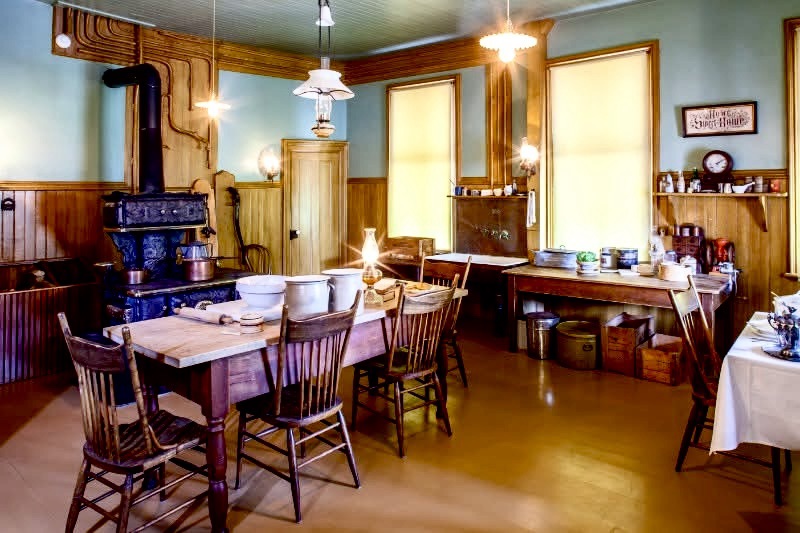
The extensive documentation provided by the Dousman heirs served as the basis for a documentary restoration of Villa Louis that began in 1994. With more than $2 million dollars provided by a mix of private- and public-sector funding sources, the restoration is now complete. Today the Villa Louis is the finest example of a British Arts and Crafts interior in a rural setting in the United States.

Go and enjoy learning more about this beautiful place of history!
 Live life to the fullest! Explore your world!
Nice home
LikeLiked by 2 people